About International Code Flags
Welcome to Buoys on the Water, your trusted resource for all things maritime. One crucial aspect of marine communication that has stood the test of time is the International Code of Signals (ICS), more commonly known as International Code Flags. These flags provide a universal language at sea, enabling vessels to communicate important messages quickly and effectively, regardless of language barriers or radio limitations.
From signalling distress, medical needs, or course changes to conveying simple instructions between ships, the International Code Flags are an essential tool for ensuring safety and smooth sailing in busy waters. In this section, we'll explore these colourful symbols' history, meanings, and practical applications, helping you confidently use them in your maritime adventures.
Alpha flag

The Alpha flag is a crucial signal in the International Code of Signals. Its primary meaning is "I have a diver down; keep well clear at slow speed." This flag is not just a symbol but a responsibility for alerting nearby vessels to the presence of divers in the water, ensuring their safety by signalling other boats to maintain a safe distance.
Bravo flag

The Bravo flag in the International Code of Signals is used to signify "I am carrying or loading/discharging dangerous goods." It alerts nearby vessels and port authorities to hazardous materials, such as fuel, explosives, or chemicals, ensuring heightened safety precautions.
Charlie flag

The Charlie flag in the International Code of Signals. It is used to communicate "Affirmative" or "Yes," indicating a positive response to a question or request. This flag is often employed in coordinated manoeuvres or during communication between vessels to confirm understanding and agreement.
Delta flag

The Delta flag in the International Code of Signals: “Keep clear of me; I am manoeuvring with difficulty." This warning is crucial for other vessels, indicating that the boat flying the Delta flag needs extra space due to restricted movement, which could be caused by towing, anchoring, or navigating in tight quarters. It is typically displayed by vessels in busy waterways or during complex operations where precise movement is essential for safety.
Echo flag

The Echo flag in the International Code of Signal communicates, "I am altering my course to starboard," informing nearby vessels of a change in direction to the right. This signal is essential for preventing collisions, especially in congested waterways or during close-quarters manoeuvring.
Foxtrot flag
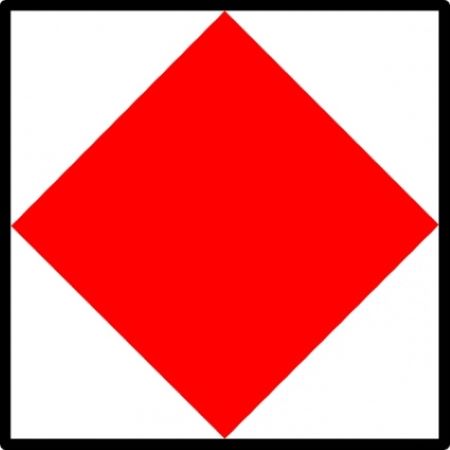
The Foxtrot flag in the International Code of Signals says, "I am disabled; communicate with me," indicating that the vessel is experiencing difficulties and may need assistance. This flag is vital for alerting nearby ships and authorities that the vessel cannot manoeuvre properly and requires attention. In some instances, the Foxtrot flag is also used by fishing vessels to indicate they are hauling in nets, ensuring others keep a safe distance.
Golf flag

The Golf flag in the International Code of Signals conveys the message, "I require a pilot." It is commonly used by vessels approaching a harbour or port, signalling the need for a local pilot to help navigate safely through restricted waters. In some situations, especially for fishing boats, the Golf flag can also indicate that the vessel is hauling in nets.
Hotel flag

The Hotel flag is in the International Code of Signals. It means "I have a pilot on board," informing other vessels that a local pilot is assisting in navigating the ship through a harbour or narrow waters. This signal is commonly used when a vessel enters or leaves a port, ensuring others know its status and intentions.
India flag

The India flag is in the International Code of Signals. It signals the message "I am altering my course to port," indicating a change in direction to the left. This is particularly important in close-quarter situations, ensuring that nearby vessels are aware of the manoeuvre and can adjust accordingly to avoid collisions. The India flag is critical in safe navigation, especially in congested or narrow waterways where clear communication is essential.
Juliet flag

The Juliet flag is in the International Code of Signals. It conveys, "I am on fire and have dangerous cargo; keep clear." This flag is crucial for alerting nearby vessels and authorities to a serious emergency and ensuring they maintain a safe distance from the affected vessel.
Kilo flag
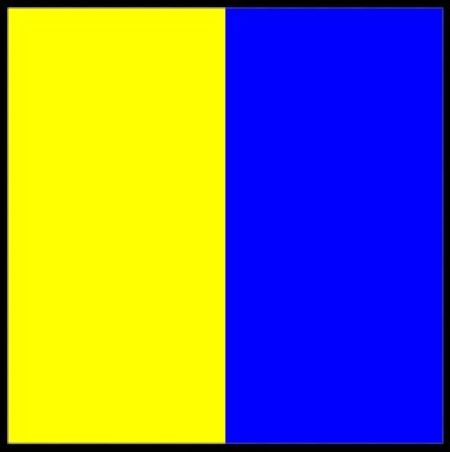
The Kilo flag in the International Code of Signals. It conveys the message "I wish to communicate with you," indicating that the vessel seeks to establish contact with another ship. This flag is often used when verbal communication is not possible, such as during radio silence or when vessels are close. Displaying the Kilo flag helps facilitate essential information exchanges between vessels, enhancing safety and coordination in busy waterways.
Lima flag

The Lima flag is in the International Code of Signals. It conveys the message "You should stop your vessel immediately," often used to signal an order for a vessel to halt its operations or movement. This flag is crucial for ensuring maritime safety when immediate cessation of activity is necessary, such as during inspections, emergencies, or navigational hazards.
Mike flag

The Mike flag in the International Code of Signals. It conveys, "My vessel is stopped and making no way through the water." This flag serves as a crucial warning to nearby vessels, indicating that the flagged vessel is not currently manoeuvring and may require assistance or caution from others. It is essential in busy shipping lanes or during adverse weather conditions, ensuring that other boats maintain a safe distance.
November flag

The November flag in the International Code of Signals. It conveys "No" or "Negative," indicating a refusal or a negative response to a question or request. This flag is important for clear communication at sea, helping to prevent misunderstandings that could arise during maritime operations. By using the November flag, vessels can efficiently communicate vital information, especially when radio communication is limited or unreliable.
Oscar flag

The Oscar flag in the International Code of Signals. It conveys the message "Man overboard," indicating that someone has fallen off the vessel and requires immediate assistance. Displaying the Oscar flag alerts nearby ships and authorities to the emergency, prompting them to assist in rescue operations. It is essential for ensuring a quick response, which is crucial for the safety of the individual in the water.
Papa flag

The Papa flag in the International Code of Signals. It conveys, "In the harbour, all persons should report on board as the vessel is about to sail." This signal is crucial for ensuring that crew members and passengers are aware of impending departures, helping to avoid delays and ensuring everyone is accounted for before leaving the dock.
Quebec flag

The Quebec flag in the International Code of Signals. It conveys, "My vessel is healthy, and I request free pratique," indicating that the vessel is free from infectious disease and seeking permission to enter a port or harbour. This flag is essential during health inspections, especially in the context of international shipping and travel. By displaying the Quebec flag, vessels can facilitate a smooth entry into ports, ensuring compliance with health regulations. Its use promotes safety and public health by helping authorities quickly identify ships with no health risks.
Romeo flag

The Romeo flag in the International Code of Signals. It conveys the message, "The vessel is at anchor." This flag is essential for informing nearby vessels of the anchored status, helping to prevent collisions and ensuring that other boats maintain a safe distance. Displaying the Romeo flag is particularly important in busy waterways or during reduced visibility, as it enhances safety and awareness among surrounding vessels. Its clear and distinct design makes it easily recognisable, promoting effective communication on the water.
Sierra flag

The Sierra flag in the International Code of Signals. It conveys the message "I am operating astern propulsion," indicating that the vessel is moving backwards and may not completely control its direction. This flag is particularly important in congested or narrow waterways, as it alerts nearby vessels to exercise caution and gives the flagged vessel space to manoeuvre safely.
Tango flag

The Tango flag in the International Code of Signals. It conveys, "Keep clear of me; I am engaged in fishing." This flag is essential for alerting nearby vessels that the flagged boat is actively fishing and may have lines or nets in the water, posing a potential hazard for other boats. By displaying the Tango flag, fishermen can ensure that other vessels maintain a safe distance, protecting both their gear and the safety of other mariners.
Uniform flag

The Uniform flag in the International Code of Signals. It conveys the message "You are running into danger," alerting nearby vessels that they may be approaching hazardous conditions or areas. This flag serves as a crucial warning, encouraging mariners to exercise caution and alter their course if necessary to avoid potential risks.
Victor flag
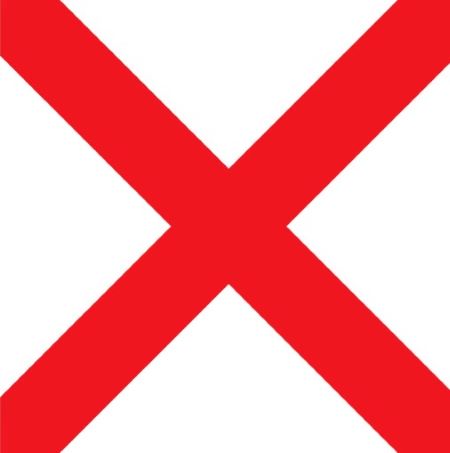
The Victor flag is in the International Code. It conveys the message "I require assistance," indicating that the vessel flying this flag is distressed and needs help. This signal is critical for alerting nearby vessels and authorities to an emergency, prompting immediate action to assist. The Victor flag plays a vital role in maritime safety, ensuring that those in need receive timely support.
Whiskey flag

The Whiskey flag is in the International Code of Signals. It conveys the message "I require medical assistance," indicating that the vessel flying this flag needs medical help for its crew or passengers. This signal is crucial for alerting nearby vessels and authorities to a medical emergency, prompting them to respond swiftly. The Whiskey flag is essential in ensuring the safety and well-being of those on board, facilitating timely medical intervention.
X-ray flag

The X-ray flag is in the International Code of Signals. It signals the message, "Stop carrying out your intentions and watch for my signals. " This flag is often used when a vessel needs to halt its current course of action and wait for further instructions. It is crucial for preventing potential conflicts or dangers, especially in busy or controlled waters where precise coordination is needed.
Yankee flag

The Yankee flag in the International Code of Signals. It conveys the message "I am dragging anchor," indicating that the vessel cannot maintain its position and may be in danger of drifting into hazardous waters or other vessels. This flag is critical for alerting nearby ships to exercise caution and be prepared to assist if necessary. Displaying the Yankee flag helps enhance maritime safety by ensuring that other vessels know the situation and can take appropriate action.
Zulu flag

The Zulu flag in the International Code of Signals. It conveys the message "I require a tug," indicating that the vessel requires towage assistance, often due to mechanical failure or difficult navigation conditions. This flag is essential for alerting nearby vessels and tugboats to the situation, facilitating a quick response to provide the necessary help. Displaying the Zulu flag enhances safety by ensuring that other mariners know the flagged vessel's predicament and can offer assistance if needed. Its straightforward design helps ensure effective communication in critical situations on the water.
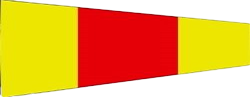
Numerical Pennants
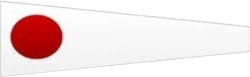
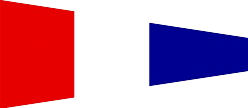
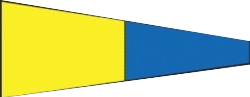
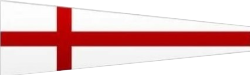
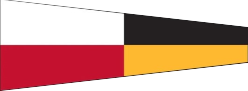
The ICS also includes numerical pennants (0-9), which are used to convey numerical data such as course, speed, or time. These pennants are triangular and, when used in combination with alphabetical flags, can indicate specific information like coordinates, dates, or quantities.
Zero (0) |
 |
One (1) |
 |
Two (2) |
 |
Three (3) |
 |
Four (4) |
 |
Five (5) |
 |
Six (6) |
 |
Seven (7) |
 |
Eight (8) |
 |
Nine (9) |
 |